
I Thought I Was Good at Starting Over
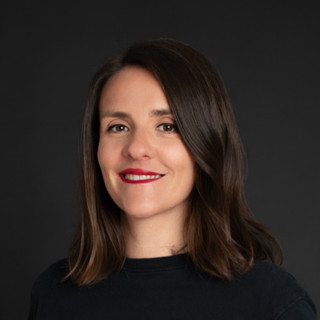
Four daughters, several countries and a career rebuilt more than once. Today, Lena is a psychologist and school counselor based in The Hague. From the outside, her story might look like one of resilience: moving to multiple countries, raising four children, studying, starting over professionally, and eventually created her own practice.
But that is only part of it.
There were also wrong decisions and wrong people. Times when she doubted herself, felt stuck, or simply had no idea what she was doing. There were choices she would make differently today and others that might still look strange from the outside but made sense to the person she was then.
For a long time, Lena believed that if she worked hard enough, she could make things happen. Life gradually taught her something else. Being capable doesn't mean being in control.
And sometimes growing doesn't mean moving forward at all. Sometimes it means accepting where you are, taking responsibility for how you got there and deciding what to do next.
I Learned Early That Life Isn't a Straight Line
Looking back, I think I learned quite early that being capable doesn't protect you from getting things wrong.
As a child, many things came easily to me. I skipped a grade, was successful in competitive sports, and collected quite a few trophies along the way. From the outside, I probably looked like someone who was doing very well. But growing up was much messier than that.

When I stopped competitive sport during puberty, I lost something that had given me structure, confidence and a sense of who I was. My mental health deteriorated and I needed treatment. I was looking for belonging and independence, and I didn't always look for them in the right places. I chose friends who weren't necessarily good for me. I made decisions that I wouldn't make today.
And then I became pregnant.
Becoming a mother quite young changed the direction of my life. Suddenly there was another human being depending on me while I was still trying to understand myself. But my story isn't quite as simple as “I made a mistake, grew up and got my life back on track.”
At twenty, while I was still at school, I consciously chose to have another child.
Looking back, I sometimes find that decision remarkable myself. It certainly wasn't the most straightforward way to build an education or a career. But family, security and belonging meant something different to me then than they do today.
I wasn't making decisions for the woman I would become twenty years later. I was making them as the person I was then. So I finished school while pregnant with my second daughter and started studying and working in the sport and health industry.
That was also where something began to fascinate me that would later become a major part of my professional life. I worked with people who often knew perfectly well what would be good for their health. They knew they wanted to exercise more, eat differently, reduce stress, or change certain habits.
And yet, knowing wasn't enough. I found that fascinating.
Why can we understand something rationally and still struggle to act accordingly? Why do we repeat behaviours we actually want to change? What makes changes easier for one person and incredibly difficult for another? Those questions gradually pulled me towards psychology.
And looking back, there is a certain irony in that. Because the same questions applied to my own life too. I don't regret choosing my family. But over the years I have become much more aware of how the choices we make – including the ones we make willingly – shape the options we have later. Maybe that is one reason why I'm so fascinated by human behaviour today.
We like to look back at our lives and create a logical story: “Of course I should have known; of course I should have chosen differently.” But the person looking back already knows how the story continued. The person making the decision didn't.
We like to think that people make rational decisions when they know better. But human behaviour is rarely that simple. We are influenced by emotions, relationships, belonging, habits, our environment and the stories we carry about ourselves. I first became interested in that professionally. Later, I realised how much it applied to me too.
Remembering that has made me much less interested in judging people's choices – and much more interested in understanding them. While pregnant with my third daughter, I eventually started studying psychology alongside work.
I had no idea then how much those questions – why we do what we do, why change can be so difficult, and how much our environment and relationships shape us – would eventually become the red thread running through my work.
When Being the One Who Manages Isn't Enough
Shortly afterwards, my husband's career took us abroad, to Latvia. My daughters were twelve years old, nine years old, and eight months old.
I was so excited. I stopped working and paused my studies to take care of our home, our children and this completely new life abroad. At first, I loved it.
I loved the international bubble. I could spend entire evenings listening to people's stories – where they came from, what had brought them there, how differently people lived and thought. Soon after moving, I became pregnant again. Suddenly there were four daughters, a husband who travelled and worked a lot, and me trying to hold everyday life together in a country that wasn't mine.
I had always been good at organising things. Solving problems. Getting on with it. So that is what I did. Until I realised that being able to manage everything didn't necessarily mean I was doing well. After about a year, some of the friendships I had invested in disappeared again because people moved away. Living abroad truly has its challenges. With two teenagers, a toddler and a newborn, I couldn't simply go out and rebuild a social life whenever I felt lonely.
I was exhausted. And gradually I realised that what I missed wasn't only friends. I missed myself. I missed having a place where people saw Lena – not only the mother, wife, organiser, cook, cleaner, appointment-maker, and carrier of all the invisible things that keep a family running. That was difficult to admit. Because it was my responsibility to look after myself. I loved my children. I had chosen this life. I was grateful for many parts of it.
And still, something was missing. Those things can be true at the same time. So I started investing time in my studies again. I connected with other students, many of whom, like me, weren't twenty anymore. I made new friends. Slowly, I felt some of my energy coming back. Eventually, I finished my Bachelor's degree shortly before we moved back to Germany.
Sometimes You Just Want Life to Be Easy
There is one tiny experience from Latvia that I still remember surprisingly clearly. My second daughter was around eleven and had been having problems with her ears. After several appointments, she was finally prescribed medication. I stood with her in the pharmacy, prescription in my hand. The woman behind the counter said something in Latvian. I didn't understand. My Latvian was very limited, so I tried English.
Nothing. I pulled out my phone and tried Google Translate. She turned away. And suddenly I felt tears coming. Not because I was sad, but because I was furious. My child needed medication. I was her mother. I was supposed to know what to do. I was normally the person who found a solution. And I couldn't even make myself understood.
For that moment, I didn't want another intercultural learning experience. I didn't want to be resilient or adventurous. I just wanted something to be easy. I wanted to be somewhere where I knew the rules. Somewhere I could ask a simple question and understand the answer. Somewhere getting medicine for my child didn't become another problem I had to solve. Eventually, I called a Latvian-speaking friend and we sorted it out.
It was such a small incident. But I still remember exactly how powerless I felt. And strangely, I'm grateful for that experience today. Because I know what it feels like to be the person who doesn't have the words. Who doesn't understand the system. Who has to depend on somebody else's willingness to slow down and meet them halfway.
You don't easily forget that feeling.
Home, And Then Starting Again

Being back in Germany felt wonderfully easy in some ways. Everything worked in my language. I started working again, and I loved having colleagues and a professional life. We found a child-friendly neighbourhood. Life felt settled.
For two years.
Then my husband got what we jokingly call “bumblebees in his butt” and applied for another international position. In the middle of the pandemic, we moved to Panama City. This time, only our two younger daughters, then six and seven, came with us. Our oldest was happily studying and our second daughter stayed in Germany to finish high school.
Leaving them behind was difficult. As parents, we spend years teaching our children to become independent – and then they actually do it. Nobody really tells you how strange that can feel.
Panama during the pandemic was quite an adventure. Restrictions were extremely severe and the school took place online for about a year. I became my daughters' private teacher. Therefore building a network was difficult, but I took every opportunity I could find to build a new network. Again, I did what I knew how to do. I built a life for everyone. And again, once everyone else was reasonably settled, the same question returned: “What about me?”
At thirty-eight years old, I started my Master's degree in psychology. I volunteered, continued learning and completed additional training in systemic counseling. I wanted a professional life again too. And that turned out to be harder than I expected.
When Silence Starts to Feel Like Rejection
I wrote emails to organisations and schools. I looked for opportunities to volunteer or do an internship as a school counselor. Often, nobody replied. At first it was frustrating. Then, slowly, I started thinking those unanswered emails mean something about me.
Maybe I'm not interesting enough. Maybe I'm not qualified enough. Maybe I'm simply not good enough. I wish I could say that studying psychology makes you immune to thoughts like that.
It doesn't.
“It took me a while to understand that communication works differently across cultures. Sometimes people simply didn't reply rather than explaining that they didn't have the capacity or weren't interested. Their silence wasn't necessarily a judgement about me.
That sounds obvious when you write it down.
It doesn't always feel obvious when you're the one waiting for the answer. Living in different countries has made me much more aware of how quickly we interpret other people's behaviour through our own experiences, expectations and cultural lens.
What feels rude to me might feel completely normal to somebody else. What feels like rejection may never have been intended as rejection. I think that has made me more curious about people. And more compassionate too.
I Really Thought the Netherlands Would Be Easy
When we moved back to Europe and chose the Netherlands, I genuinely thought: “I've got this, this is Europe.” We would still have the adventure of living abroad, but we would be close to our older daughters, grandparents and old friends. And I had a plan. Learn Dutch quickly. Get my psychology qualifications recognised. Find a job. Simple. Except it wasn't.
I volunteered. I went to the library to practise Dutch. I attended networking events and expat fairs. I applied for jobs. I tried to understand the Dutch professional system and worked on getting my qualifications recognised.
I was constantly doing something. And increasingly frustrated. Why wasn't my Dutch better already? Why hadn't I found the right job? Why did every administrative step seem to lead to another one? So I did what had worked for me for much of my life. I tried harder.
Another application. Another conversation. Another course. Another way in. And slowly I had to accept something I still don't particularly enjoy accepting: sometimes, effort changes things; sometimes, it doesn't.
Sometimes, you can be doing everything you can – and things still don’t work out. Knowing the difference is something I'm still learning.
Building Something That Was Mine

Eventually, I decided to start my own small practice: Mindfuel Counseling.
And I was ridiculously proud. I built my own website and started seeing my first clients.
But looking back, I think starting the practice meant more to me than simply creating a job.
It was something that was mine. For years, prevention had been the red thread through my professional interests. I don't believe people should have to wait until everything has fallen apart before they are “allowed” to ask for support.
Prevention, the idea at the heart of the practice, turned out to run through the rest of her work too.
Often, we notice much earlier that something isn't working anymore.
We keep having the same arguments. We react to our children in ways we don't like. Stress follows us everywhere. Old patterns appear in new relationships. We know rationally what we want to change – and somehow keep doing the same thing. I understand that not only from a professional point of view, but also from a personal perspective.
Around the same time, I started working as a school counselor. I love this work because it fits with how I understand psychology. People rarely make sense in isolation. There is a family, a classroom, a relationship, a history, a culture, a system around them. Today I bring together what I learned from health management, nutrition, psychology and systemic counseling.
But underneath all of it is a simple belief: people are experts on their own lives.
My job isn't to tell them how to live. It's to help them become curious enough to understand why they do what they do, and what they might want to do differently.
There Was Never One Big Turning Point
People sometimes ask me what my turning point was. There wasn't one. There were hundreds. Good decisions and bad ones. People who were good for me and people who weren't. Things I started and finished. Things I tried that went nowhere. Embarrassing moments. Opportunities I nearly didn't take. There were times I was brave and there were times I was simply scared.
And, of course, mistakes. I don't think growing means reaching a point where you stop making them. Maybe it means becoming a little better at recognising them, taking responsibility for their consequences and deciding what you want to do differently next time. Somewhere underneath all of this, there has always been a small voice telling me: “It's okay, I've got this.” I imagine her as a tiny cheerleader living in my head.
She isn't always the loudest person there. My inner critic is often much louder.
She tells me somebody else can do it better. My Dutch should be better. I should be further along. I should have figured this out by now. I know those thoughts very well.
The cheerleader doesn't make them disappear. Eventually, she just says: “Keep going.”
Maybe Independence Isn't What I Thought It Was
For a long time, independence meant being able to do things myself.
I could organise a move. Raise children. Study. Work. Build networks. Solve problems. Start again. Today I think about it differently. Especially as mothers, it is surprisingly easy to slowly disappear behind everybody else's needs.
Nobody announces it. There is no single day when you decide: from now on, everybody else comes first and I'll move myself to the bottom of the list.
It happens quietly. A child needs something. Your partner's job determines where the family moves. Somebody has to remember the appointment, buy the groceries, arrange the school things, and notice that someone isn't doing well.
You do it because you love them. And then one day you realise that your own name has moved very far down the list. I recognised that in myself.
And I didn't like it. Changing it hasn't been one brave decision. It has been lots of small ones. Studying again. Working again. Building something of my own. Learning Dutch, imperfectly and much more slowly than I had planned.
Allowing my own ambitions to take up space. Maybe independence isn't about never needing anyone. Maybe it's about making sure you don't disappear from your own life.
Two Years Later – Still Building
This summer marked two years in the Netherlands.
I love The Hague. I love the dunes and the beach, but strangely, what I love most are the red brick houses. Somehow they give me a feeling of belonging and safety. My Dutch is still not perfect. I'm working on it. Our younger daughters cycle everywhere, something I appreciate even more after our years in Panama, and they are wonderfully independent.
Professionally, I'm still building too. I work as a school counselor.

I'm growing my practice. I'm developing workshops around questions that fascinate me: how our relationship with food is shaped by much more than hunger, and how our upbringing, beliefs, values and emotional state influence the way we raise our children.
Biographical work fascinates me for the same reason. Understanding your story doesn't mean blaming your parents or your past. It gives you the chance to recognise what you have been carrying. And then decide: “What do I want to keep?” and “What do I want to write differently?”
Fulfilled?
That's a big word. I still have too many ideas. I still want things to happen faster than they sometimes do. I still doubt myself. I still make mistakes.
I don't think there is a finished version of me waiting somewhere at the end of all this. But I love creating spaces where people can look at their own stories without immediately judging them. I want parents to be able to say, “I handled that badly,” without that sentence turning into, “I am a bad parent.”
I want people to understand themselves a little better. And I want us to stay curious about ourselves and each other. Because curiosity can change relationships. Am I finished building that? Definitely not. Maybe I never will be. And maybe that's the point.
What Would I Tell Someone Starting Over?
Don't wait until you feel completely ready. You probably won't. Try things. Get some of them wrong. Change direction. Ask for help. And when something doesn't work, try not to immediately turn it into evidence that there is something wrong with you.
If your circumstances allow it, volunteer. A volunteer position can give you much more than something to put on your CV. It gives you people, language, context, confidence and a place in a community.
And there is one thing I wish I had understood much earlier. Don't disappear from your own life. You can love your children deeply and still need something that belongs to you.
You can support your partner and still have ambitions of your own. You can be grateful for your life and still want to change parts of it. You can make mistakes and still trust yourself.
I used to think independence meant being able to manage everything myself. Now I think it means something very different: loving the people in your life without disappearing into their lives. I'm still learning how to do that.
A huge thank you to Lena for trusting us with her story, for being so open about the doubts, the frustration, and everything else that rarely makes it into the highlight reel of expat life.
If her story resonated with you, Lena is also a psychologist practicing right here in the Netherlands and you can find her on HubExpat, where she's listed among our trusted professionals for the expat community 👉 [Discover Lena's profile on HubExpat]


Comments